Fall Field Trips: Apple Picking & Agricultural Education
This fall, our younger students stepped outside the classroom and into the fields — embarking on two enriching field trips that brought science, nutrition, and environmental stewardship to life in memorable ways.
Apple Picking at the Orchard (PreK–6th Grade)
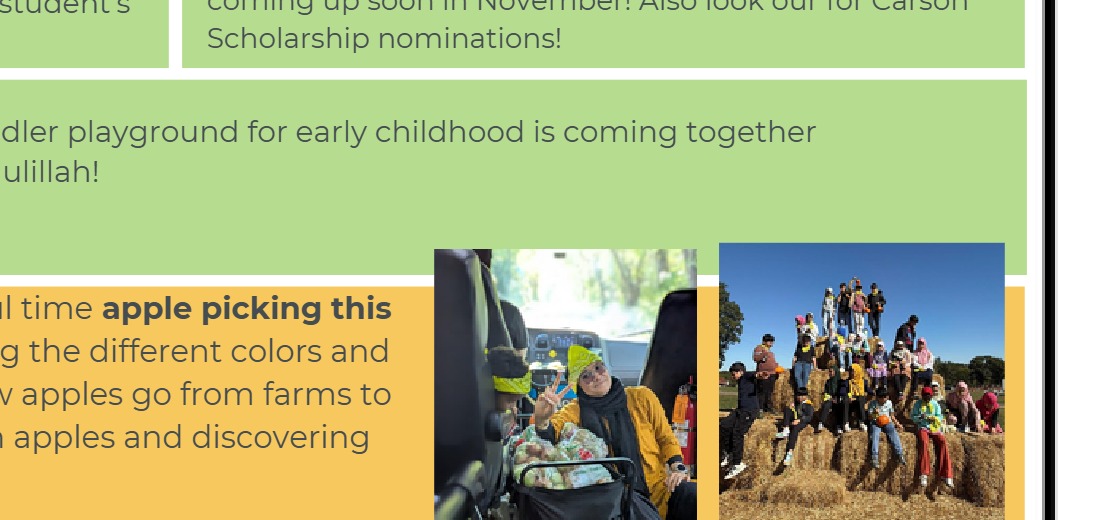
Students in Grades PreK through 6th had a wonderful time apple picking this fall, visiting a local orchard where they got to experience the harvest season up close. It was far more than a fun outing — the trip was a hands-on lesson in where our food comes from.
Students explored how apple trees grow, why different apple varieties ripen at different times, and how fruit travels from the farm to our tables. They observed the different colors, textures, and sizes of apples in the orchard and got to taste fresh-picked apples on the spot — discovering that each variety has its own unique flavor. For many students, this was their first time picking fruit straight from a tree, and the excitement and curiosity on their faces said it all.
The trip also gave teachers an opportunity to connect the experience to classroom learning — discussing plant life cycles, nutrition, and the importance of agriculture in everyday life.
Close Encounters with Agriculture (3rd & 4th Grade)
Our 3rd and 4th graders had an incredible experience at the Close Encounters with Agriculture program, a curriculum-aligned field experience that covers a wide range of topics connecting farming, science, and environmental responsibility.
During the trip, students learned about:
- Agricultural production — how crops are grown, harvested, and processed
- Nutrition and diet — the relationship between grains, food groups, and healthy eating
- The environment — water quality, soil erosion, different types of soil, and wildlife habitats
- Sustainability — how students themselves can make a positive impact on the environment through everyday choices
What made this experience especially effective was that all of the learning happened through fun, engaging, hands-on activities — not lectures. Students got to work with soil samples, observe different habitats, and participate in interactive demonstrations that made abstract concepts concrete and memorable.
These field trips reflect MCS’s belief that education extends beyond textbooks. When children connect with the natural world, they develop a deeper appreciation for the gifts Allah has given us and a greater sense of responsibility to care for the earth.